
English Grammar
12 English Tenses Explained with Examples and Hindi Meaning
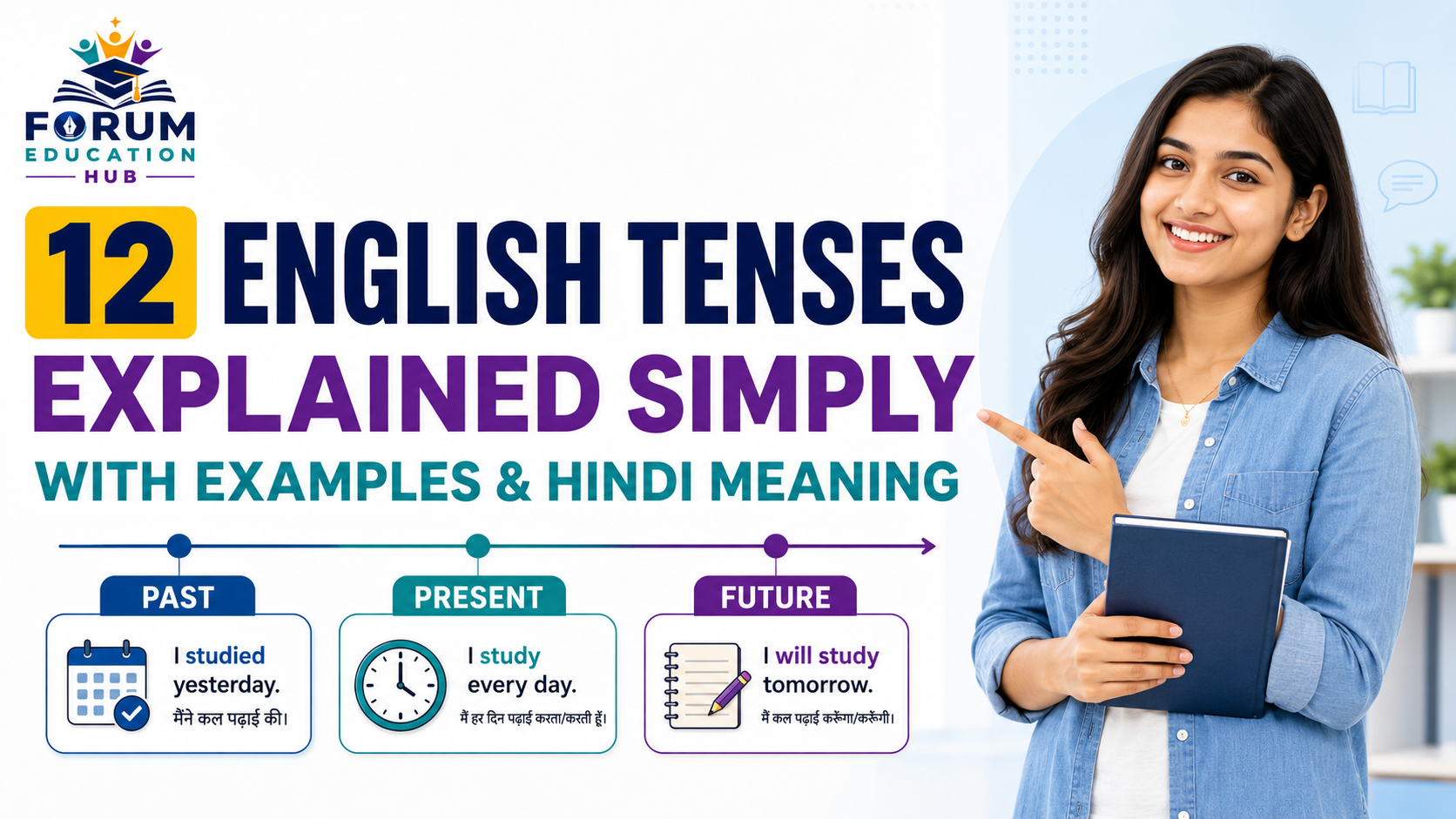
12 English Tenses with Examples and Hindi Meaning
Do you understand English words but struggle to explain what happened yesterday, what is happening now, or what you plan to do tomorrow?
The problem is often not vocabulary. It is understanding how English tenses work.
Tenses help you communicate when an action happens. Once you understand the basic patterns, it becomes easier to describe your daily routine, share experiences, explain ongoing activities, and discuss future plans.
In this guide, Forum Education Hub explains all 12 English tenses with simple rules, sentence structures, practical examples, and Hindi meanings.
What Is a Tense?
A tense tells us the time of an action, event, or situation.
English learners commonly study three main time periods:
- Present: Something happening now or regularly.
- Past: Something that already happened.
- Future: Something that will happen later.
Each time period has four commonly taught forms:
- Simple
- Continuous
- Perfect
- Perfect Continuous
Together, these create the 12 commonly taught English tense forms.
Understanding V1, V2, and V3
Before learning the tenses, understand these verb forms:
| Verb | V1: Base Form | V2: Past Form | V3: Past Participle |
|---|---|---|---|
| Go | go | went | gone |
| Eat | eat | ate | eaten |
| Write | write | wrote | written |
| Speak | speak | spoke | spoken |
| Take | take | took | taken |
| See | see | saw | seen |
| Do | do | did | done |
| Make | make | made | made |
| Learn | learn | learned | learned |
| Work | work | worked | worked |
Examples:
- I go to the office every day.
- I went to the office yesterday.
- I have gone to the office.
Now let us understand each tense individually.
1. Simple Present Tense
When Do We Use It?
Use the simple present for:
- Daily routines
- Habits
- General facts
- Regular activities
- Permanent situations
Sentence Structure
Positive: Subject + V1 + object.
With he, she, or it, add -s or -es to the main verb.
Negative: Subject + do not / does not + V1.
Question: Do / Does + subject + V1?
Examples
| English Sentence | Hindi Meaning |
| I wake up early every day. | मैं हर दिन जल्दी उठता/उठती हूँ। |
| She speaks English confidently. | वह आत्मविश्वास से अंग्रेज़ी बोलती है। |
| They work in an office. | वे एक कार्यालय में काम करते हैं। |
| He does not drink coffee. | वह कॉफी नहीं पीता है। |
| Do you exercise regularly? | क्या आप नियमित रूप से व्यायाम करते हैं? |
Common time expressions: Every day, usually, often, always, sometimes, never.
2. Present Continuous Tense
When Do We Use It?
Use the present continuous for:
- Actions happening right now
- Temporary activities
- Situations happening around the present time
Sentence Structure
Positive: Subject + am / is / are + verb-ing.
Negative: Subject + am / is / are + not + verb-ing.
Question: Am / Is / Are + subject + verb-ing?
Examples
| English Sentence | Hindi Meaning |
| I am learning English. | मैं अंग्रेज़ी सीख रहा/रही हूँ। |
| She is preparing for her interview. | वह अपने इंटरव्यू की तैयारी कर रही है। |
| They are waiting for the bus. | वे बस का इंतज़ार कर रहे हैं। |
| He is not sleeping. | वह सो नहीं रहा है। |
| Are you listening to me? | क्या आप मेरी बात सुन रहे हैं? |
Common time expressions: Now, right now, at the moment, currently, today.
3. Present Perfect Tense
When Do We Use It?
Use the present perfect for:
- Recently completed actions
- Experiences at an unspecified time
- Actions with a result that matters now
Sentence Structure
Positive: Subject + have / has + V3.
Negative: Subject + have / has + not + V3.
Question: Have / Has + subject + V3?
Examples
| English Sentence | Hindi Meaning |
| I have finished my homework. | मैंने अपना होमवर्क पूरा कर लिया है। |
| She has completed the assignment. | उसने असाइनमेंट पूरा कर लिया है। |
| We have visited Jaipur before. | हम पहले जयपुर जा चुके हैं। |
| He has not called me yet. | उसने अभी तक मुझे फोन नहीं किया है। |
| Have you submitted the form? | क्या आपने फॉर्म जमा कर दिया है? |
Common time expressions: Already, just, yet, ever, never, recently.
Important Correction
❌ I have completed the work yesterday.
✅ I completed the work yesterday.
Use the simple past when mentioning a finished time such as yesterday, last week, or in 2024.
4. Present Perfect Continuous Tense
When Do We Use It?
Use this tense for an activity that started in the past and continues now.
Sentence Structure
Positive: Subject + have / has + been + verb-ing + since / for.
Negative: Subject + have / has + not + been + verb-ing.
Question: Have / Has + subject + been + verb-ing?
Examples
| English Sentence | Hindi Meaning |
| I have been studying for two hours. | मैं दो घंटे से पढ़ रहा/रही हूँ। |
| She has been working here since 2022. | वह 2022 से यहाँ काम कर रही है। |
| We have been learning English for three months. | हम तीन महीने से अंग्रेज़ी सीख रहे हैं। |
| He has not been feeling well. | वह कुछ समय से अच्छा महसूस नहीं कर रहा है। |
| Have you been waiting for a long time? | क्या आप लंबे समय से इंतज़ार कर रहे हैं? |
Since and For
Use since for a starting point:
- Since Monday
- Since 2020
- Since morning
- Since 9 o’clock
Use for for a duration:
- For two hours
- For three days
- For six months
- For a long time
5. Simple Past Tense
When Do We Use It?
Use the simple past for:
- Completed actions in the past
- Events that happened at a specific past time
- Past habits and experiences
Sentence Structure
Positive: Subject + V2 + object.
Negative: Subject + did not + V1.
Question: Did + subject + V1?
Examples
| English Sentence | Hindi Meaning |
| I visited my friend yesterday. | मैंने कल अपने दोस्त से मुलाकात की। |
| She completed her course last month. | उसने पिछले महीने अपना कोर्स पूरा किया। |
| They played cricket on Sunday. | उन्होंने रविवार को क्रिकेट खेला। |
| He did not attend the meeting. | वह बैठक में शामिल नहीं हुआ। |
| Did you call the customer? | क्या आपने ग्राहक को फोन किया? |
Important Correction
❌ I did not went there.
✅ I did not go there.
After did or did not, use the base form of the verb.
6. Past Continuous Tense
When Do We Use It?
Use the past continuous for an action that was happening at a particular time in the past.
It can also describe an ongoing past action interrupted by another event.
Sentence Structure
Positive: Subject + was / were + verb-ing.
Negative: Subject + was / were + not + verb-ing.
Question: Was / Were + subject + verb-ing?
Examples
| English Sentence | Hindi Meaning |
| I was studying when you called. | जब आपने फोन किया, मैं पढ़ रहा/रही था/थी। |
| She was cooking dinner. | वह रात का खाना बना रही थी। |
| They were playing outside. | वे बाहर खेल रहे थे। |
| He was not paying attention. | वह ध्यान नहीं दे रहा था। |
| Were you sleeping at that time? | क्या आप उस समय सो रहे थे? |
Example with two actions:
I was attending an online class when the internet stopped working.
यहाँ पहली गतिविधि जारी थी और दूसरी घटना बीच में हुई।
7. Past Perfect Tense
When Do We Use It?
Use the past perfect when one past action happened before another past action.
Sentence Structure
Positive: Subject + had + V3.
Negative: Subject + had + not + V3.
Question: Had + subject + V3?
Examples
| English Sentence | Hindi Meaning |
| I had finished my work before dinner. | मैंने रात के खाने से पहले अपना काम पूरा कर लिया था। |
| She had left before I arrived. | मेरे पहुँचने से पहले वह जा चुकी थी। |
| They had completed the project before the deadline. | उन्होंने समय-सीमा से पहले प्रोजेक्ट पूरा कर लिया था। |
| He had not prepared for the interview. | उसने इंटरव्यू की तैयारी नहीं की थी। |
| Had you met her before the event? | क्या आप कार्यक्रम से पहले उनसे मिल चुके थे? |
Easy Way to Remember
The earlier past action usually uses had + V3.
The class had started before I joined.
8. Past Perfect Continuous Tense
When Do We Use It?
Use this tense for an activity that continued for some time before another past event.
Sentence Structure
Positive: Subject + had + been + verb-ing + since / for.
Negative: Subject + had + not + been + verb-ing.
Question: Had + subject + been + verb-ing?
Examples
| English Sentence | Hindi Meaning |
| I had been studying for two hours before dinner. | रात के खाने से पहले मैं दो घंटे से पढ़ रहा/रही था/थी। |
| She had been working there for five years before she resigned. | इस्तीफा देने से पहले वह वहाँ पाँच वर्षों से काम कर रही थी। |
| They had been waiting for an hour before the bus arrived. | बस आने से पहले वे एक घंटे से इंतज़ार कर रहे थे। |
| He had not been sleeping well before the examination. | परीक्षा से पहले वह अच्छी तरह नहीं सो रहा था। |
| Had you been practising before the presentation? | क्या आप प्रस्तुति से पहले अभ्यास कर रहे थे? |
9. Simple Future Tense
When Do We Use It?
Use the simple future for:
- Future decisions
- Promises
- Predictions
- Offers
- Actions that will happen later
Sentence Structure
Positive: Subject + will + V1.
Negative: Subject + will not + V1.
Question: Will + subject + V1?
Examples
| English Sentence | Hindi Meaning |
| I will call you tomorrow. | मैं आपको कल फोन करूँगा/करूँगी। |
| She will attend the class tonight. | वह आज रात कक्षा में शामिल होगी। |
| We will help you. | हम आपकी मदद करेंगे। |
| He will not be late. | उसे देर नहीं होगी। |
| Will you join the meeting? | क्या आप बैठक में शामिल होंगे? |
Another Useful Future Pattern
Use going to for an existing plan or intention:
I am going to start an English course next week.
Hindi meaning: मैं अगले सप्ताह अंग्रेज़ी का कोर्स शुरू करने वाला/वाली हूँ।
10. Future Continuous Tense
When Do We Use It?
Use the future continuous for an action that will be in progress at a specific future time.
Sentence Structure
Positive: Subject + will + be + verb-ing.
Negative: Subject + will + not + be + verb-ing.
Question: Will + subject + be + verb-ing?
Examples
| English Sentence | Hindi Meaning |
| I will be attending class at 9 PM. | मैं रात 9 बजे कक्षा में भाग ले रहा/रही होऊँगा/होऊँगी। |
| She will be travelling tomorrow morning. | वह कल सुबह यात्रा कर रही होगी। |
| They will be preparing for their examinations. | वे अपनी परीक्षाओं की तैयारी कर रहे होंगे। |
| He will not be working on Sunday. | वह रविवार को काम नहीं कर रहा होगा। |
| Will you be using the laptop this evening? | क्या आप आज शाम लैपटॉप का उपयोग कर रहे होंगे? |
11. Future Perfect Tense
When Do We Use It?
Use the future perfect for an action that will be completed before a particular future time.
Sentence Structure
Positive: Subject + will + have + V3.
Negative: Subject + will + not + have + V3.
Question: Will + subject + have + V3?
Examples
| English Sentence | Hindi Meaning |
| I will have completed the course by next month. | अगले महीने तक मैं कोर्स पूरा कर चुका/चुकी होऊँगा/होऊँगी। |
| She will have reached the office by 10 AM. | सुबह 10 बजे तक वह कार्यालय पहुँच चुकी होगी। |
| They will have finished the project before Friday. | शुक्रवार से पहले वे प्रोजेक्ट पूरा कर चुके होंगे। |
| He will not have submitted the report by then. | तब तक उसने रिपोर्ट जमा नहीं की होगी। |
| Will you have completed the work by tomorrow? | क्या आप कल तक काम पूरा कर चुके होंगे? |
Common time expressions: By tomorrow, by next week, by 10 AM, before Friday.
12. Future Perfect Continuous Tense
When Do We Use It?
Use this tense to explain how long an activity will have continued by a future time.
Sentence Structure
Positive: Subject + will + have + been + verb-ing + since / for.
Negative: Subject + will + not + have + been + verb-ing.
Question: Will + subject + have + been + verb-ing?
Examples
| English Sentence | Hindi Meaning |
| By December, I will have been working here for three years. | दिसंबर तक मुझे यहाँ काम करते हुए तीन साल हो चुके होंगे। |
| Next month, she will have been studying English for one year. | अगले महीने उसे अंग्रेज़ी पढ़ते हुए एक साल पूरा हो जाएगा। |
| By 10 PM, we will have been travelling for five hours. | रात 10 बजे तक हमें यात्रा करते हुए पाँच घंटे हो चुके होंगे। |
| He will not have been living there for long by then. | तब तक उसे वहाँ रहते हुए अधिक समय नहीं हुआ होगा। |
| Will you have been working here for two years by June? | क्या जून तक आपको यहाँ काम करते हुए दो साल हो चुके होंगे? |
This form is less common in everyday conversation, but understanding it can help with advanced grammar and examinations.
All 12 Tenses: Quick Revision
| Tense | Sentence Structure | Example |
| Simple Present | Subject + V1 | I study English. |
| Present Continuous | Subject + am/is/are + verb-ing | I am studying English. |
| Present Perfect | Subject + have/has + V3 | I have studied English. |
| Present Perfect Continuous | Subject + have/has been + verb-ing | I have been studying English. |
| Simple Past | Subject + V2 | I studied English. |
| Past Continuous | Subject + was/were + verb-ing | I was studying English. |
| Past Perfect | Subject + had + V3 | I had studied English. |
| Past Perfect Continuous | Subject + had been + verb-ing | I had been studying English. |
| Simple Future | Subject + will + V1 | I will study English. |
| Future Continuous | Subject + will be + verb-ing | I will be studying English. |
| Future Perfect | Subject + will have + V3 | I will have studied English. |
| Future Perfect Continuous | Subject + will have been + verb-ing | I will have been studying English. |
Remember: In the simple present, use V1 + s/es with he, she, or it.
Common Tense Mistakes to Avoid
Mistake 1
❌ He go to the office every day.
✅ He goes to the office every day.
Mistake 2
❌ I am knowing the answer.
✅ I know the answer.
Mistake 3
❌ I have met him yesterday.
✅ I met him yesterday.
Mistake 4
❌ She didn’t completed the work.
✅ She didn’t complete the work.
Mistake 5
❌ I am working here since 2020.
✅ I have been working here since 2020.
Mistake 6
❌ He has been waiting since two hours.
✅ He has been waiting for two hours.
Mistake 7
❌ She has been studying for Monday.
✅ She has been studying since Monday.
Mistake 8
❌ I will call you when I will arrive.
✅ I will call you when I arrive.
Mistake 9
❌ They was playing cricket.
✅ They were playing cricket.
Mistake 10
❌ Have you saw this movie?
✅ Have you seen this movie?
Which Tenses Are Most Useful for Daily Speaking?
For beginners, start with these five:
- Simple Present: I work in a bank.
- Present Continuous: I am working right now.
- Simple Past: I worked yesterday.
- Present Perfect: I have finished my work.
- Simple Future: I will work tomorrow.
After becoming comfortable with these forms, move to the remaining tenses.
Daily Tense Practice Exercise
Choose one verb and create sentences about different times.
For example, use learn:
- I learn English every day.
- I am learning English now.
- I learned five new words yesterday.
- I have learned many useful expressions.
- I have been learning English for two months.
- I will learn more sentences tomorrow.
This exercise helps you understand how one action changes across different time periods.
Seven-Day English Tense Practice Plan
Day 1
Practise the simple present and present continuous.
Day 2
Practise the present perfect and present perfect continuous.
Day 3
Practise the simple past and past continuous.
Day 4
Practise the past perfect and past perfect continuous.
Day 5
Practise the simple future and future continuous.
Day 6
Practise the future perfect and future perfect continuous.
Day 7
Review all 12 forms and speak for two minutes about your past, present, and future.
Final Advice
You do not need to memorise every grammar rule before speaking English. Start by understanding the time of the action and choosing the appropriate sentence pattern.
Ask yourself:
- Is the action happening regularly?
- Is it happening right now?
- Did it happen in the past?
- Has it already finished?
- Will it happen later?
- Has it continued for some time?
These questions will help you select the correct tense.
At Forum Education Hub, we help students, job seekers, and professionals understand English grammar through practical examples, daily speaking exercises, Hindi explanations, and confidence-building activities.
Ready to Improve Your English Grammar?
Join Forum Education Hub and learn to use English tenses naturally in daily conversations, interviews, examinations, and professional situations.
Learn • Speak • Grow • Succeed